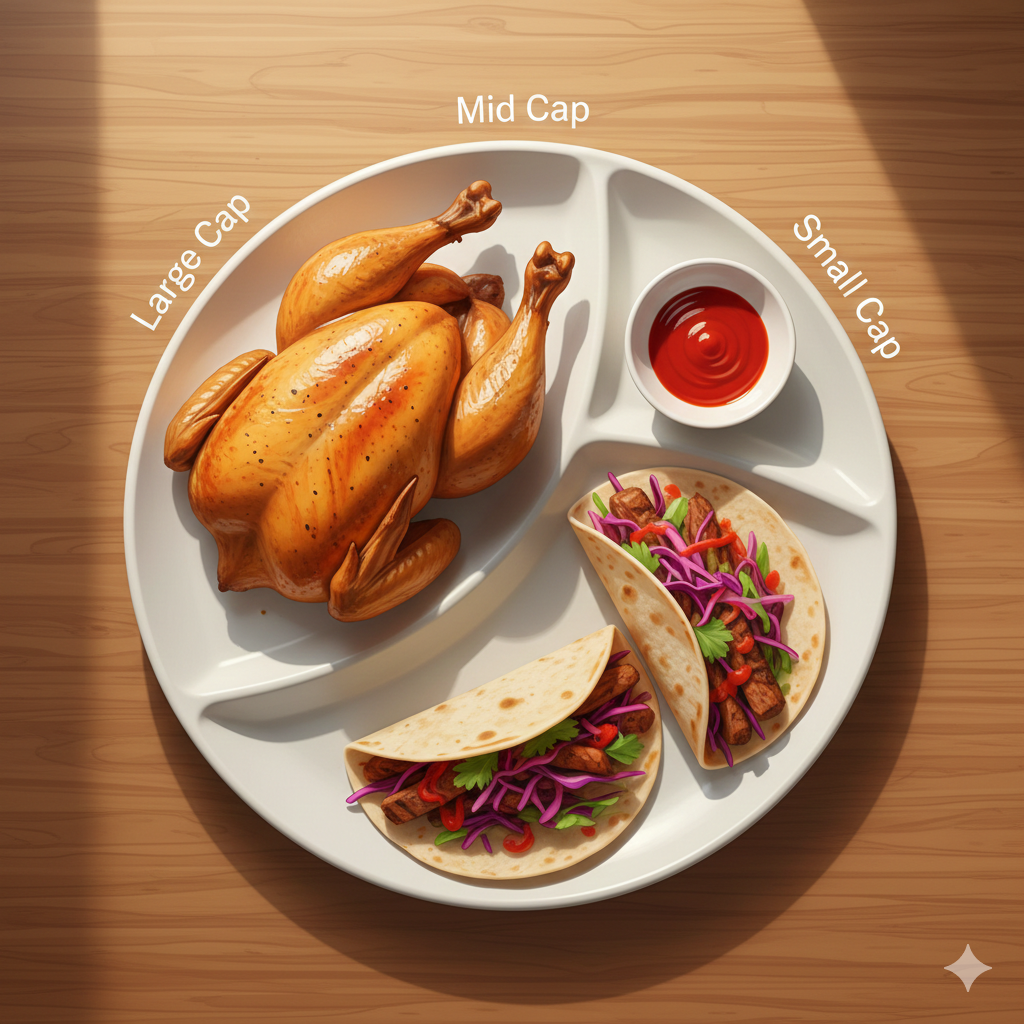

Large cap vs mid cap vs small cap – real risk comparison
🍽️ Market-cap buffet: Large caps = roasted chicken (safe, filling). Mid caps = spicy tacos (exciting, risky). Small caps = ghost pepper sauce (tiny drop – thrill, whole spoon – regret).
Over the past 11 years (2015–2025), the three categories wrestled for the crown. Micro-caps (even smaller than small caps) topped the charts six times. But in 2025, large caps suddenly grabbed the crown because investors fled to safety when mid & small caps stumbled. This whiplash is why we need a real risk comparison, not just return porn.
📌 1. Defining the trio (by the numbers)
market cap Large cap: Top 100 companies (e.g. Reliance, HDFC). Mid cap: 101–250 (ambitious teenagers). Small cap: 251 onwards (garage startups or future giants).
| Parameter (2015–2025) | Large cap | Mid cap | Small cap |
|---|---|---|---|
| Negative years | 2 years | 2 years | 4 years |
| Deepest one-year fall | -18% to -20% | -25% to -30% | -35% to -45% |
| P/E premium (vs large) | baseline ~22.6x | ~55% premium | ~47% premium |
| Risk efficiency (coefficient of variation) | ✅ optimal | ⚖️ moderate | ⚠️ erratic |
Small caps have double the negative years and when they fall, they fall hard. In 2025, while large caps were flat-to-positive, small caps were already bleeding. That’s the risk: if you need cash during a downturn, small caps force you to sell at a loss.
🧠 Valuations – expensive trap
Mid & small caps traded at 33–35x earnings by mid-2025, large caps ~22.6x (55% premium). You’re paying Ferrari prices for a Volkswagen. As Prashant Jain said: small-cap returns post-COVID were a low-base effect (they fell 60–70% during COVID vs 30–40% for large). Once base normalised, party slowed.
⚡ 2. Mid cap paradox — sweet spot or no man’s land?
Morningstar data: Mid caps historically outperformed both large and small caps over 20–30 years. S&P MidCap 400 returned 985% vs S&P 500’s 563% (25 years). BUT – they correlate heavily with large caps. If large caps dip 10%, mid caps might dip 15%. They’re not great diversifiers, but great return-enhancers for 10-year horizons.
🐘 3. Interest rate sensitivity – the hidden risk
Small & mid caps hate rising rates. They borrow from banks (variable debt), so rate hikes crush profits. Large caps use bonds & cash hoards. During 2022–2023 rate cycles, small caps bled while large caps held up. “When tide goes out, small caps often forget swim trunks.”
🎭 which one are you?
- 🤵 large – check portfolio once a year, sleep like baby, love dividends.
- 🎢 mid – enjoy thrills with seatbelt, have 5–7 years window.
- 🚀 small – nerves of steel, 10+ years, comfortable with 30% dips (and possible bankruptcies).
📚 where data comes from (no fake stuff)
✔️ ACE MF, Nifty TRI, Morningstar style box, Investopedia long-term studies, Financial Express / Economic Times expert quotes. Every number can be verified – because trust is our only currency.
🎯 bottom line – mix, don’t time
foundation 60% large caps • growth 30% mid caps • lottery 10% small caps. Rebalance yearly. As of early 2026, large caps consolidate, mid caps show marginal strength, small caps still healing. Valuations matter – if small caps trade at 50% premium to large, it’s probably not entry time.