
BNPL Debt Management: How to Escape the Buy Now Pay Later Trap Before It Destroys Your Finances

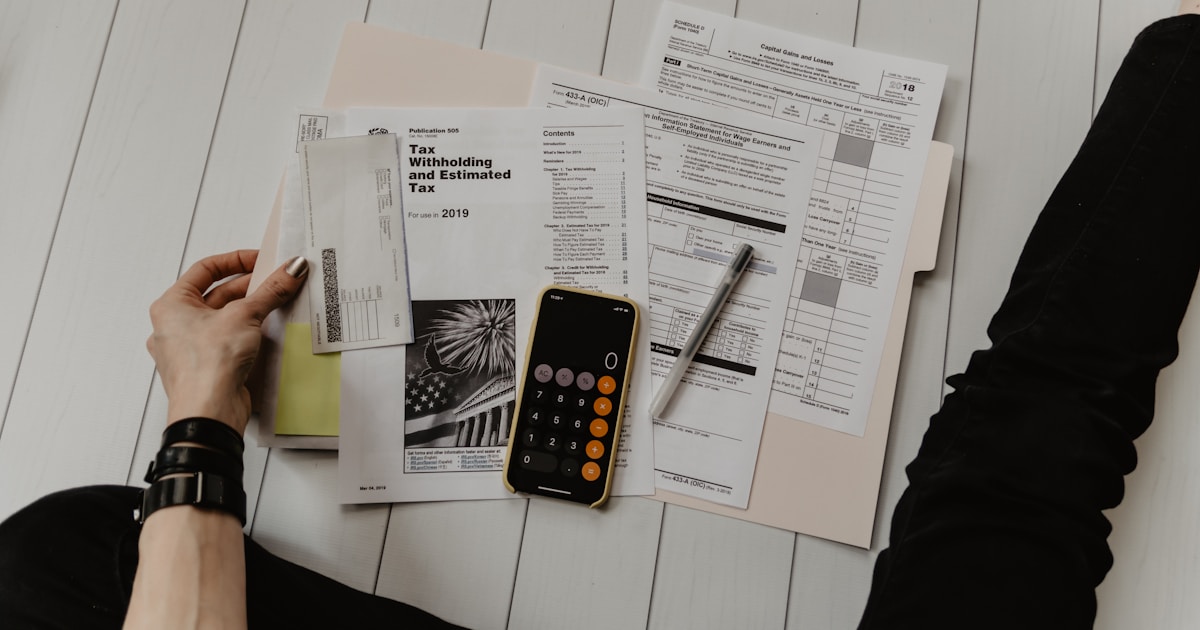
BNPL Debt Management: The Complete Guide to Escaping Buy Now Pay Later Traps in 2026
How to break free from the silent debt spiral, protect your credit score, and rebuild financial discipline — without giving up online shopping forever.
📑 Table of Contents
- What Is BNPL and Why Is It Everywhere in 2026?
- The Psychology of BNPL Spending: Why Your Brain Falls for It
- Warning Signs You Are Entering a Debt Trap
- How BNPL Affects Your Credit Score (The Hidden Damage)
- How to Repay BNPL Debt: A Step-by-Step Action Plan
- How to Escape BNPL Debt Faster
- Best Budgeting Methods to Control BNPL Usage
- Apps and Tools to Track Spending
- Common Mistakes People Make with BNPL
- Emergency Recovery Plan
- Key Takeaways
- Frequently Asked Questions
What Is BNPL and Why Is It Everywhere in 2026?
Let is start with the basics. Buy Now Pay Later (BNPL) is essentially a modern-day layaway plan — except you get the product immediately and pay for it in installments over weeks or months. Sounds harmless, right?
Here is the kicker: In 2026, the global BNPL market is valued at approximately ₹2,56,304 Crore in India alone, and it is projected to explode to ₹6,51,550 Crore by 2030. Apps like ZestMoney, Simpl, LazyPay, Amazon Pay Later, and Flipkart Pay Later have made it so frictionless that you can buy a ₹50,000 laptop with three taps on your phone — no credit check, no paperwork, no immediate pain.
And that is exactly the problem.
💡 The BNPL Business Model (Simplified)
BNPL companies do not make money from you paying on time. They make money from:
- Merchant fees (2-8% per transaction)
- Late payment charges (their real profit center)
- Interest on rolled-over balances (when you cannot pay)
- Data monetization (your spending habits are gold)
Translation: They want you to slip up. It is not personal — it is business.
The typical BNPL user in 2026 is a 25-35 year old urban professional who shops online 3-4 times a week. They have normalized the “pay later” mindset so much that ₹2,000 feels like ₹500 when split into four payments. This mental accounting trick is what makes BNPL dangerously addictive.
The Psychology of BNPL Spending: Why Your Brain Falls for It
Let is talk about your brain for a moment. Specifically, the part that makes terrible financial decisions while feeling perfectly rational.
The “Pain of Paying” Disappears
Behavioral economists have known for decades that humans experience something called the “pain of paying” — a literal neurological discomfort when we hand over cash. Credit cards reduced this pain. BNPL? It virtually eliminates it.
When you pay ₹2,000 upfront for headphones, your brain screams “expensive!” When you pay ₹500 today and three more ₹500 payments later, your brain whispers “affordable.” But ₹2,000 is still ₹2,000. The math has not changed — only your perception of it has.
Present Bias and Future Discounting
Your brain is wired to prefer immediate rewards over future consequences. This is called present bias. BNPL exploits this perfectly: you get the dopamine hit of a new purchase today, while pushing the financial pain into a future that feels abstract and distant.
Here is a thought experiment: Would you buy that ₹3,000 jacket if you had to pay the full amount right now, in cash, from your wallet? If the answer is no, then BNPL did not make it affordable — it just made it feel affordable.
⚠️ The Dopamine Debt Cycle
Research from 2026 shows that BNPL users experience a dopamine spike at purchase that is 40% higher than cash buyers. But here is the dark side: the dopamine crash when payments are due triggers anxiety, which leads to more impulsive shopping as a coping mechanism. It is a literal addiction loop — and the app notifications are the triggers.
Social Proof and FOMO
“3.2 million people bought this item using Pay Later!” — Ever seen that message? That is social proof weaponized against your wallet. When everyone around you seems to be effortlessly affording things, your financial discipline erodes. FOMO (Fear Of Missing Out) makes ₹999 seem trivial when your entire Instagram feed is unboxing the same product.
Warning Signs You Are Entering a Debt Trap
Debt traps do not announce themselves with a banner. They creep in silently, one “pay later” click at a time. Here are the red flags that scream “danger” in 2026:
🚩 Red Flag #1: You are Using BNPL for Essentials
If you are splitting groceries, rent components, or utility bills into EMIs, you have crossed from convenience into survival mode. BNPL was designed for discretionary spending, not survival spending.
🚩 Red Flag #2: You Cannot Name Your Total BNPL Debt
Quick test: Without opening any apps, how much do you currently owe across all BNPL platforms? If you cannot answer within 10 seconds, you have a visibility problem — and visibility problems become debt problems.
🚩 Red Flag #3: You are Rolling Over Payments
“I will pay this month is installment next month” is the BNPL equivalent of “I will start my diet tomorrow.” Rolling over triggers penalty fees, interest accumulation, and a credit score nosedive.
🚩 Red Flag #4: Multiple BNPL Apps, Same Problem
Using ZestMoney for Amazon, Simpl for Swiggy, LazyPay for Myntra, and Flipkart Pay Later for electronics? Congratulations, you have built a fragmented debt portfolio that is nearly impossible to track.
🚩 Red Flag #5: Post-Purchase Guilt Is Your New Normal
If unboxing videos used to bring joy and now bring anxiety, your relationship with spending has turned toxic. The temporary high is not worth the lasting financial hangover.
🔥 The 5-Minute Reality Check
Open all your BNPL apps right now. Add up every pending installment. Multiply by the number of months remaining. That is your real debt number. If it is more than 20% of your monthly take-home salary, you are in the danger zone.
How BNPL Affects Your Credit Score (The Hidden Damage)
Here is where things get serious. In 2026, BNPL is not the credit-score-free playground it used to be.
The CIBIL Score Connection
Major BNPL providers in India now report to CIBIL and other credit bureaus. That “soft check” they promised? It is getting harder. Missed payments, late fees, and defaults are increasingly showing up on credit reports — and they stay there for seven years.
A single missed BNPL payment can drop your CIBIL score by 50-100 points. To put that in perspective: going from 750 to 650 can increase your home loan interest rate by 0.5-1%. On a ₹50 lakh loan over 20 years, that is an extra ₹6-12 lakhs in interest. That “affordable” ₹999 purchase just cost you lakhs.
| BNPL Behavior | CIBIL Impact | Recovery Time |
|---|---|---|
| On-time payments | Neutral to Positive | N/A |
| 1 missed payment (30 days) | -50 to -80 points | 6-12 months |
| 2+ missed payments | -100 to -150 points | 12-24 months |
| Default / Write-off | -200+ points | 7 years |
| Multiple BNPL hard inquiries | -10 to -20 points each | 12 months |
The Hidden Credit Utilization Trap
Even if you pay on time, BNPL can hurt your credit score through credit utilization. Many BNPL lines are reported as revolving credit. If you have a ₹50,000 limit and consistently use ₹40,000, that is 80% utilization — a red flag for lenders even if you never miss a payment.
📊 Pro Tip: The 30% Rule
Keep your total BNPL utilization under 30% of your total available limit across all platforms. This means if you have ₹1,00,000 in combined BNPL limits, try to keep your outstanding balance below ₹30,000 at any given time.
How to Repay BNPL Debt: A Step-by-Step Action Plan
Okay, enough doom and gloom. Let is fix this. Here is a battle-tested, no-nonsense strategy to eliminate your BNPL debt systematically.
Conduct a Full Debt Audit
Open every BNPL app, screenshot your outstanding balances, and create a master spreadsheet. Include: platform name, total outstanding, monthly installment, interest rate (if any), due dates, and late fees. You cannot fight what you cannot see.
Choose Your Repayment Strategy
Two proven methods:
Avalanche Method: Pay minimums on all, then throw every extra rupee at the highest-interest debt first. Mathematically optimal.
Snowball Method: Pay minimums on all, then eliminate the smallest balance first. Psychologically powerful — quick wins build momentum.
Pick the one that matches your personality. Math nerds, go Avalanche. Motivation seekers, go Snowball.
Freeze All New BNPL Purchases
This is non-negotiable. Log into every app and disable “Pay Later” as your default payment method. Uninstall shopping apps if needed. Use the “cooling off” rule: wait 48 hours before any non-essential purchase over ₹500.
Negotiate with BNPL Providers
Most people do not know this: BNPL companies will negotiate. Call customer service and ask for:
- Waived late fees (especially if it is your first miss)
- Extended payment plans with lower installments
- Settlement offers for lump-sum payments
- Interest rate reductions for consistent payment history
Be polite but persistent. Remember: they had rather get something than write you off.
Automate Your Payments
Set up auto-debit for at least the minimum payments on all BNPL accounts. Late fees are where they get you — typically ₹250-500 per missed payment. Automation removes willpower from the equation.
Create a “BNPL Freedom Fund”
Open a separate savings account (or use a digital piggy bank app) and auto-transfer 10% of your salary every month. Label it “BNPL Freedom.” Watch it grow. When it equals your total BNPL debt, pay everything off in one glorious day.
How to Escape BNPL Debt Faster
Want to accelerate your debt freedom? Here are the turbochargers:
The “Side Hustle Sprint”
In 2026, the gig economy is massive. Dedicate 3-6 months to an income sprint — freelancing, tutoring, delivery driving, content creation, whatever fits your skills. Direct 100% of this extra income to BNPL debt. It is temporary pain for permanent relief.
💰 Quick Cash Ideas for 2026
- Sell unused electronics on OLX/Flipkart (that old phone is worth ₹3,000-8,000)
- Freelance on Upwork/Fiverr (even basic Excel skills pay ₹500-1,500/hour)
- Weekend food delivery (₹800-1,500 per day)
- Tutoring online (₹300-800 per hour)
- Participate in paid research studies (₹500-2,000 per session)
The “Subscription Audit”
Most people are shocked to discover they are paying ₹2,000-5,000 monthly in forgotten subscriptions. Netflix, Prime, Spotify, gym memberships you never use, app subscriptions you forgot about. Cancel everything non-essential for 3 months. That is ₹6,000-15,000 straight to your debt.
The “Spending Swap” Challenge
For 30 days, every time you want to buy something non-essential, transfer the exact amount to your BNPL Freedom Fund instead. Wanted that ₹1,200 shirt? Transfer ₹1,200. Wanted that ₹400 Starbucks? Transfer ₹400. It is painful in the moment, but watching your debt shrink is sweeter than any latte.
Best Budgeting Methods to Control BNPL Usage
Paying off debt is half the battle. Staying debt-free is the war. Here are budgeting frameworks that actually work in 2026:
The 50/30/20 Rule (Modified for BNPL Recovery)
Traditional 50/30/20 splits income into Needs/Wants/Savings. During BNPL recovery, flip it:
| Category | Standard Rule | BNPL Recovery Rule |
|---|---|---|
| Needs (Rent, Food, Transport) | 50% | 55% |
| Wants (Entertainment, Dining) | 30% | 10% |
| Debt Repayment | 0% (part of savings) | 25% |
| Savings & Emergency Fund | 20% | 10% |
The “Envelope System” for Digital Natives
Old-school envelope budgeting works because it is tactile — you see cash disappearing. For digital natives, use separate bank accounts or apps like Jupiter, Fi, or Walnut that let you create “spaces” or “pots.” Transfer your monthly “wants” budget to a separate account. When it is gone, it is gone. No BNPL to save you.
The “48-Hour Rule”
Non-essential purchase over ₹1,000? Mandatory 48-hour waiting period. Write it down, sleep on it, discuss it with a friend. If you still want it after 48 hours and can pay cash (not BNPL), go ahead. You will be shocked how many “must-haves” become “meh, nevermind.”
✅ The “One In, One Out” Rule
For every non-essential purchase, you must sell or donate something of equal value first. Want new shoes? Sell an old pair. New phone case? Donate the old one. This creates friction that BNPL removes — and friction is your friend.
Apps and Tools to Track Spending
You cannot manage what you do not measure. Here are the best tools for 2026:
📱 Walnut
Indian-made, SMS-based expense tracking that automatically categorizes your spending. Perfect for tracking BNPL payments across multiple apps. Free version is sufficient for most users.
📱 Jupiter / Fi
Neobanks with built-in “spaces” for goal-based savings. Create a “BNPL Freedom” space and watch it grow. The visual progress is motivating.
📱 ET Money
Tracks expenses, investments, and credit scores in one dashboard. The credit score monitoring is crucial for watching your recovery.
📱 YNAB (You Need A Budget)
Paid tool (₹800/month) but worth it if you are serious. Uses “give every rupee a job” philosophy that prevents mindless spending.
📱 Google Sheets (The Free Powerhouse)
Do not underestimate a simple spreadsheet. Create columns for Date, Platform, Item, Cost, Installment, Due Date, and Status. Color-code paid (green) and pending (red). The visual accountability is surprisingly effective.
Common Mistakes People Make with BNPL
Learn from others’ mistakes so you do not have to make them yourself:
❌ Mistake #1: Treating BNPL Like “Free Money”
BNPL is debt. Full stop. Calling it “pay later” does not change the fact that you owe real money to a real company that will really report you to credit bureaus.
❌ Mistake #2: Stacking Multiple BNPL Purchases
“It is only ₹500 per month” × 8 platforms × 6 months = ₹24,000 you forgot about. The fragmentation is intentional — it makes the total debt invisible.
❌ Mistake #3: Ignoring the Fine Print
That “0% interest” offer? It often comes with a processing fee of 1-3%. Miss one payment and the interest jumps to 24-36% APR. Always read the terms — yes, all of them.
❌ Mistake #4: Using BNPL to Build Credit
Some apps market themselves as “credit builders.” In reality, consistent credit card usage (with full payments) builds credit far more reliably than BNPL, which can actually hurt your score through utilization and inquiry impacts.
❌ Mistake #5: Refinancing BNPL with More BNPL
Using Platform A to pay off Platform B is the financial equivalent of using one fire to put out another. It does not work, and you will end up with more flames.
Emergency Recovery Plan
What if you are already in deep? Here is the emergency protocol:
Step 1: Stop the Bleeding
Immediately disable all BNPL accounts. Contact each provider and request a temporary spending freeze. This prevents new debt while you stabilize.
Step 2: Prioritize Survival Expenses
Rank your expenses: Rent/food/transport > BNPL minimums > Everything else. If you cannot cover minimums, contact providers immediately — most have hardship programs they do not advertise.
Step 3: The “Debt Avalanche” Emergency Version
If you have multiple BNPL debts and cannot pay all minimums, prioritize:
- Highest interest rate debts (to stop the bleeding)
- Debts reported to CIBIL (to protect your credit score)
- Smallest balances (for quick psychological wins)
Step 4: Consider Professional Help
If your BNPL debt exceeds 40% of your annual income, consider:
- Credit counseling agencies (RBI-registered NGOs offer free counseling)
- Debt consolidation loans (lower interest than BNPL penalties)
- Balance transfer credit cards (0% APR for 6-12 months, but requires discipline)
🆘 RBI Ombudsman for BNPL Complaints
If a BNPL provider is harassing you, charging illegal fees, or refusing to provide statements, file a complaint with the RBI Ombudsman at cms.rbi.org.in. It is free, and providers take RBI complaints very seriously.
🎯 Key Takeaways: Your BNPL Debt Management Cheat Sheet
- BNPL is debt, not convenience — treat it with the same seriousness as a bank loan
- Audit all your BNPL debts today; visibility is the first step to control
- Choose Avalanche or Snowball method and stick to it religiously
- Freeze all new BNPL purchases until you are debt-free
- Negotiate with providers — late fees and interest rates are often flexible
- Automate minimum payments to protect your credit score
- Use the 48-hour rule for all non-essential purchases
- Track spending with apps like Walnut, Jupiter, or a simple spreadsheet
- Never use BNPL for essentials or to pay off other BNPL debt
- Build an emergency fund of 3 months’ expenses to prevent future BNPL dependency
📱 Know someone drowning in BNPL debt? Share this on WhatsApp — it might save their financial future.
Share on WhatsAppFrequently Asked Questions (FAQ)
Yes, increasingly so. Major BNPL providers like ZestMoney, Simpl, and LazyPay now report to CIBIL and other credit bureaus. On-time payments may have neutral or slightly positive impact, but missed payments can drop your score by 50-100 points per incident. Multiple hard inquiries from BNPL applications can also reduce your score by 10-20 points each. As of 2026, RBI guidelines mandate stricter reporting standards for BNPL products, making credit impact more significant than in previous years.
Missing a BNPL payment triggers a cascade of consequences: (1) Late fees ranging from ₹250 to ₹500 per missed payment, (2) Interest charges of 24-36% APR on the outstanding balance, (3) Negative reporting to credit bureaus after 30 days of delinquency, (4) Account suspension preventing future purchases, and (5) Potential debt collection calls. Some platforms offer a 3-5 day grace period, but this varies by provider. The best strategy is to contact the provider immediately if you know you will miss a payment — many offer hardship extensions that are not advertised.
Absolutely, and you should. BNPL providers prefer partial recovery over total loss. Call their customer service and request: (1) Waived late fees (often granted for first-time offenders), (2) Extended payment plans with reduced installments, (3) Lump-sum settlement offers (typically 60-80% of outstanding balance), and (4) Interest rate reductions. Be prepared with your financial documentation, remain polite but firm, and get any agreement in writing before making payments. If they refuse, mention that you are considering filing a complaint with the RBI Ombudsman — this often unlocks previously unavailable options.
Rarely. “No-cost EMI” typically means the interest is built into the product price or covered by the merchant, not that there is zero cost to you. In 2026, most “no-cost EMI” offers include: (1) A processing fee of 1-3% of the transaction value, (2) GST on the processing fee (18%), (3) Potential foreclosure charges if you pay early, and (4) Higher product prices compared to upfront payment options. Always calculate the total cost: if a ₹30,000 phone costs ₹32,500 on “no-cost EMI,” you are effectively paying 8.3% interest. Read the terms and conditions carefully — the real cost is always buried in the fine print.
Break the habit loop with these concrete steps: (1) Remove BNPL as your default payment method on all shopping apps, (2) Uninstall shopping apps from your phone and use browser-only access (adds friction), (3) Implement the 48-hour rule for any purchase over ₹1,000, (4) Use cash or debit card for all non-essential purchases for 30 days, (5) Set spending limits in your BNPL apps (most allow this), (6) Find an accountability partner — share your BNPL usage with a trusted friend, and (7) Replace the dopamine hit of shopping with a free alternative (exercise, creative hobbies, social activities). Remember: BNPL apps are designed by behavioral psychologists to be addictive. Fighting back requires intentional friction.
While both are forms of credit, they differ significantly: Credit Cards offer a revolving credit line with 20-50 day interest-free periods, reward points, cashback, and comprehensive consumer protection. They build credit history when used responsibly. BNPL offers fixed installment plans for specific purchases, typically with shorter repayment windows (2-12 months), minimal or no rewards, limited consumer protection, and increasingly impacts credit scores. Credit cards require a formal application with income verification; BNPL often needs just a phone number. For disciplined users, credit cards are generally superior due to rewards and credit-building benefits. For impulsive spenders, BNPL is fragmentation makes debt harder to track and control.
Yes, though it is rare for small amounts. BNPL providers can: (1) Report defaults to credit bureaus (affecting future loans for 7 years), (2) Sell debt to collection agencies, (3) File civil suits for recovery in small causes courts, and (4) In extreme cases, initiate insolvency proceedings for large debts. However, as of 2026, RBI regulations prohibit harassment, threats, or public shaming by debt collectors. If you receive threatening calls, document everything and file a complaint with RBI or the police. The best defense is proactive communication — most providers will work with you if you are transparent about your situation.
Recovery time depends on debt size and strategy: Small debt (under ₹20,000): 1-3 months with focused repayment. Medium debt (₹20,000-₹1,00,000): 6-12 months using Avalanche or Snowball method. Large debt (₹1,00,000+): 12-24 months, potentially requiring debt consolidation or professional help. Credit score recovery takes longer: 6-12 months for minor missed payments, 12-24 months for multiple delinquencies, and up to 7 years for defaults. The key is consistency — one month of perfect payments will not fix six months of misses, but six months of perfect payments will start showing significant improvement. Track your CIBIL score monthly using free tools like Paisabazaar or BankBazaar to monitor recovery.
No — there are far better options. While some BNPL providers claim to help build credit, the reality is more nuanced and risky. In 2026, secured credit cards (backed by a fixed deposit), traditional credit cards with full monthly payments, or small personal loans from banks are superior credit-building tools. They offer: (1) Consistent positive reporting to all bureaus, (2) Lower interest rates if you ever need to carry a balance, (3) Better consumer protections, (4) Reward programs, and (5) More predictable impact on your credit score. BNPL is fragmented nature, high late fees, and inconsistent reporting make it a poor choice for intentional credit building. Use BNPL only for convenience (if at all), never as a credit strategy.
Conclusion: Your Financial Freedom Starts with One Decision
Here is the truth that nobody selling you “Pay Later” wants you to hear: Financial freedom is not about having more money — it is about making conscious choices with the money you have.
BNPL did not create impulse spending. It just industrialized it. The same brain that fell for “just four easy payments” is capable of saying “I will save for this instead.” The same finger that tapped “Buy Now” can tap “Transfer to Savings.”
In 2026, with the BNPL market exploding to ₹6.5 lakh crore, the temptation will only intensify. More apps. More offers. More “exclusive” deals. But you now have something more powerful than any discount code: awareness.
You know the psychology. You know the traps. You know the recovery strategy. You know that ₹999 in four payments is still ₹999 — and that the “convenience” tax often costs far more than the money saved.
Your journey out of BNPL debt is not about deprivation. It is about reclamation — reclaiming your paycheck from invisible installments, reclaiming your credit score from silent damage, reclaiming your peace of mind from the anxiety of next month is payments.
Start today. Not tomorrow. Not next month. Today. Open those apps. Add up those balances. Pick your strategy. Make that first extra payment. Feel the weight begin to lift.
Because the best thing you can buy with your money is not a product — it is freedom from the product.
And that, unlike everything else on your BNPL dashboard, is truly priceless.
Meta Title: BNPL Debt Management: The Complete Guide to Escaping Buy Now Pay Later Traps in 2026
Meta Description: Master BNPL debt management with proven strategies to escape Buy Now Pay Later traps, protect your credit score, and rebuild financial discipline in 2026.
Suggested Slug: bnpl-debt-management-guide-2026
OG Title: BNPL Debt Management: The Complete Guide to Escaping Buy Now Pay Later Traps in 2026
OG Description: Discover proven strategies to escape BNPL debt, protect your credit score, and rebuild financial discipline. A must-read for anyone struggling with Buy Now Pay Later payments.
Featured Image Suggestion: A clean, professional image showing a person looking relieved while reviewing financial documents on a laptop, with a subtle “debt-free” or “financial freedom” visual element. Use warm, trustworthy colors (blues and greens). Recommended: Unsplash Finance Image

Disclaimer: InvestmentSutras is an educational initiative. All articles and assessments are for educational and learning purposes only. This should not be treated as investment advice or recommendation. Please consult a registered investment advisor before acting on any suggestions.