
UPI, BNPL & The New-Age Indian Spender: The Tap-and-Pray Economy
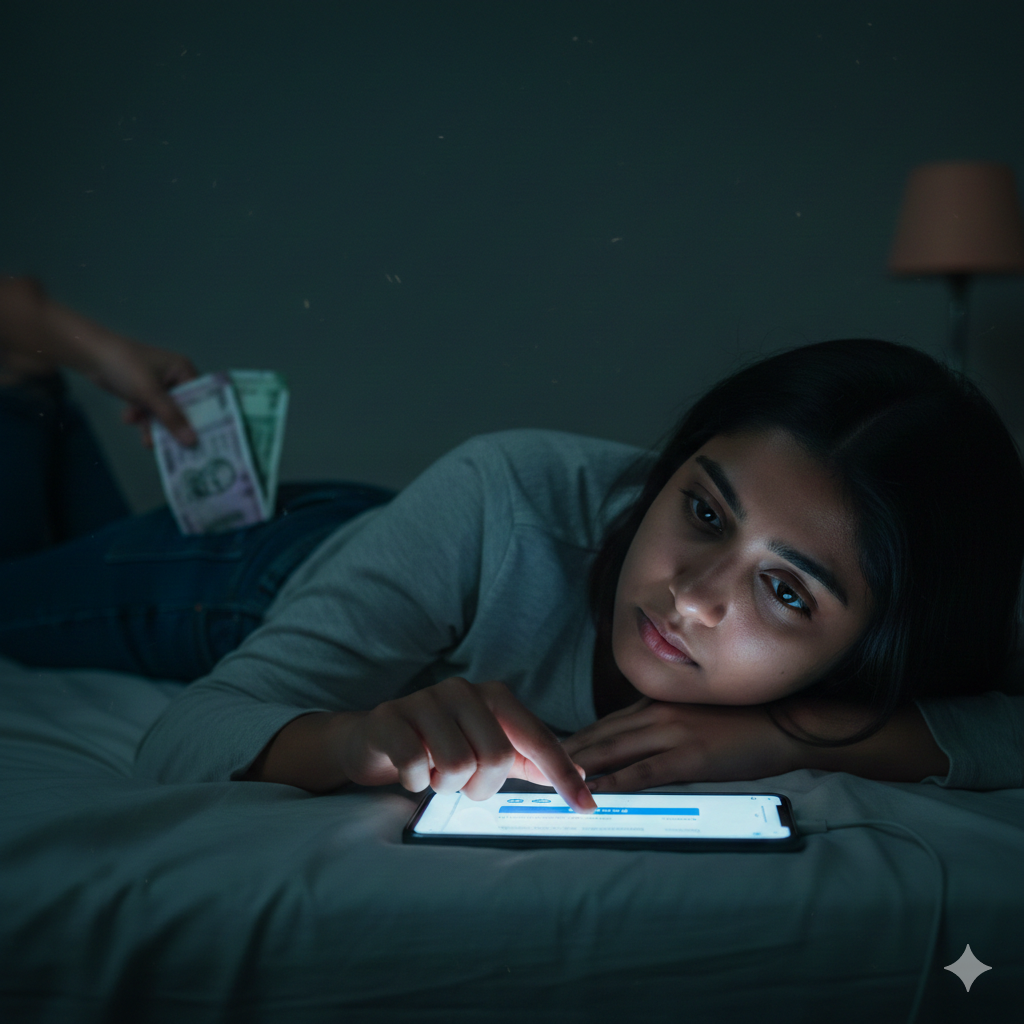
It’s 11:47 PM. You’re lying in bed, scrolling through Instagram. A sponsored ad shows a “vibe-checked” oversized hoodie with a model who looks like they haven’t paid taxes since 2019. The caption says “Summer ‘25 Drop – Pay 3 months later!” Your thumb hovers. You think, “Free money? Future me is basically a CEO, he’ll handle it.” 👉🏽 You tap. OTP auto-read. Whoosh. Money vanished. But wait—you didn’t even see the money. You just saw a UPI PIN. And a promise.
Welcome to the new India, ladies, gentlemen, and broke chai enthusiasts. We don’t spend money anymore. We “tap it away” like we’re casting a spell from Harry Potter. “Expecto Patronum” became “UPI Success”. And just like that, the great Indian middle class shifted from “Can you give me a 50 rupees discount?” to “5,000 rupees kharch karke bhi pata nahi chala.”
🧠 Digital Money Psychology: The Great Disconnect
Remember your grandparents? They had a tiffin box full of cash. Withdrawing money was a ritual—you actually felt the rupee leaving your possession. There was friction. There was pain. There was the smell of oil and vada pav on the notes. But now? Money is just a number on an app. We’ve gamified poverty.
Behavioural finance calls this the “Decoupling of Pain”. When you hand over a crisp ₹500 note, your brain’s insula (the pain region) lights up like a Diwali rocket. But UPI? Nothing. It’s just a thumbprint. “Tap. Tap. Tap. Life savings? More like life savings? gone.” We’ve essentially tricked our lizard brains into thinking we’re playing Temple Run, while our bank accounts are actually running for the hills.
🪙 Behavioural Finance: The “Future Me is a Millionaire” Fallacy
Let’s talk about Hyperbolic Discounting—a fancy term behavioural economists use to describe why you’d take ₹200 today instead of ₹500 next year. In BNPL terms, it translates to: “Why save for three months when I can look cool right now and cry later?”
We suffer from extreme present bias. The new-age Indian spender has outsourced all financial responsibility to their “future self.” Future self has a better job, no EMIs, and apparently a money tree. But news flash: Future self is just current self with more grey hair and the same broke mindset. The only difference? Future self also has a CIBIL score that’s now crying in a corner.
📉 The “Free” Money Trap (Spoiler: It’s Not Free)
BNPL (Buy Now Pay Later) products have exploded in India. Flipkart Pay Later, Amazon Pay Later, LazyPay, ZestMoney—everyone wants to give you credit for that pani puri craving. “Loan le ke mat khao” is dead. Now it’s “Loan le ke bhi khao, aur rewards points bhi kamao!”
Here’s how they get you: You buy a ₹2,000 shirt. The option says “Pay in 3 installments of ₹667.” Your brain goes, “₹667? That’s nothing! That’s like two Zomato orders!” So you buy it. Then you buy another thing. And another. Suddenly, you have 7 active BNPL plans. It’s not debt; it’s a subscription to anxiety. You’ve basically taken out a loan to look like you have your life together on Instagram.
- Interest? Oh, you thought it was free? Read the fine print. Late fee by the time you’re 3 seconds overdue: ₹450.
- Psychology: Paying in parts reduces the pain of payment. But the pain of interest? That’s future Zomato’s problem.
- Reality: You’re not “managing cash flow”; you’re just building a small empire of ₹500 debts.
⚠️ The “Tap Tap Tap” Horror Story
Let me introduce you to Rahul (28), Marketing professional, UP, India. Rahul earns ₹70,000 a month. He UPI-tapped his way through last month: chai tap, auto tap, swiggy tap, zomato tap, blinkit tap, bookmyshow tap, and one random tap for a “vintage typewriter” because vibes. End of month? He had spent ₹68,000. On what? “Bhai, kuch khaas nahi.” The UPI app showed 147 transactions. Average value: ₹462. Death by a thousand cuts—or in this case, death by a thousand chai-vada pav-funds-transfer-to-friend-for-birthday-gift.
📌 The takeaway? UPI is the fastest way to become a millionaire… if you start with a billion. For the rest of us, it’s the frictionless highway to “Where did my salary go?”
😈 The BNPL Trap: Designed for Your Impulsive Monkey Brain
You have to admire the devilish design of BNPL. It sits right at the checkout, whispering, “You deserve this. And you don’t have to pay today. Go on, treat yourself. Your future self will figure it out—maybe they’ll win a lottery or marry a rich NRI.”
It targets the pleasure center while muting the pain center. In traditional finance, buying something felt like a trade: “I give money, I get thing.” In BNPL world, it feels like: “I get thing! (money leaves silently 30 days later when I’ve forgotten about it)”.
And when 30 days later arrives, you’re already busy tapping away for something else. So you opt for the “extend by 3 months” option. And that, my friend, is the gateway drug to revolving debt at 36% APR. Congratulations, you played yourself.
🤡 Humour Break: The New-Age Indian Spender’s Prayer
“Oh mighty UPI, please let the transaction fail just this once. Let the other person’s server be down. Let the bank be under maintenance. Let me keep my dignity and my ₹200 for chai. But if it goes through, let my father not check the bank statement this weekend. Ameen.”
🔄 How to Outsmart Your Own Stupid Brain (Practical Gyaan)
I’m not here to say “Go back to cash.” Even I’m not that optimistic. But you need to hack your own psychology because the apps surely will.
1. Create Friction: Remove UPI apps from your home screen. Make it slightly annoying to pay. Type the UPI ID manually. Force a delay. Ask yourself: “Do I want this, or do I want the feeling of ordering this?” (Hint: it’s usually the latter).
2. Rename Your Bank Accounts: Give your savings account a name like “DON’T TOUCH IDIOT” or “Rent Or Starve”. Some apps let you put nicknames. Use them. Every time you go to pay, you’ll see “Withdraw from: STOP IT.” It helps. Maybe.
3. The 30-Tap Rule: If something costs more than ₹1,000, wait for 30 taps. As in, close the app, tap your desk 30 times, and think. If you still want it after simulating the payment motion, maybe it’s legit. Usually, by tap 15, you’re bored and on reels again.
4. BNPL = Bane of Your Peaceful Life: Uncheck that option. If you can’t buy it today with the money you have, you probably can’t afford it with the money you’ll maybe have tomorrow. That’s not financial advice; that’s just basic survival.
🧠 Conclusion: The Future of Spending is Here, and It’s Confused
The new-age Indian spender is a paradox. We are financially literate enough to use QR codes but financially illiterate enough to think “No Cost EMI” means the bank is doing charity. We’ve adopted UPI faster than any nation on earth—1 billion transactions a month—but our savings rate is starting to wobble because everything is just a tap away.
Digital money isn’t evil. It’s convenient. But convenience, as they say, is the enemy of consciousness. The same tap that buys you chai can also, over 30 days, buy you a hole in your pocket large enough to lose a small car.
So the next time you hover your thumb over the “Pay Now” button, pause. Look at the screen. Imagine that money as a physical stack of notes you’re setting on fire. Because psychologically? That’s exactly what’s happening. Except with less warmth and more silent regret.